
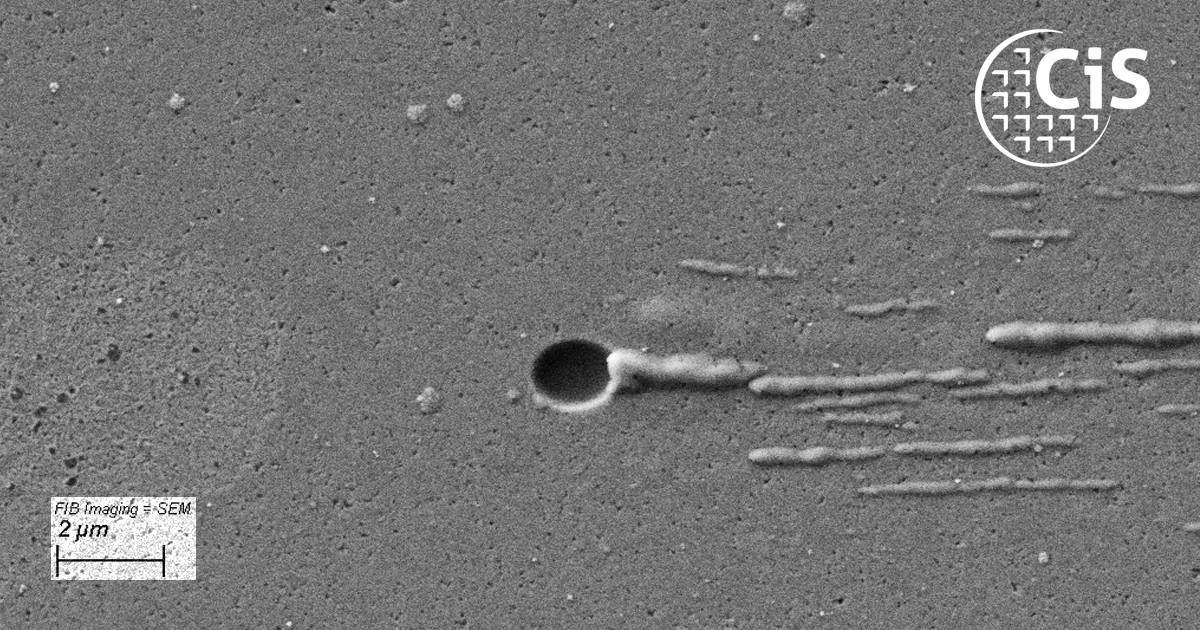
The current research project, Machine Learning Electromigration Parameters (MEL), aims to lay the groundwork for new software tools to identify and optimize materials with regard to electromigration. The effect of electromigration limits the service life and long-term stability of semiconductor devices in microsensor technology, power electronics, and integrated circuits, and can ultimately lead to their failure. As miniaturization progresses, this effect is becoming increasingly significant, as current-carrying layers are moving closer together into the single-digit nanometer range and critical current densities are being reached ever more rapidly. A better understanding of the physicochemical processes and their predictability will pave the way for new developments and optimizations. Targeted material selection and appropriate simulations require knowledge of many parameters. In a first step, parameters such as the activation energy and the effective ion charge will be determined using machine learning methods and—where available—database parameters. These form the basis for selected simulation tools such as FEM or molecular dynamics simulations. These results will then be experimentally verified. The focus here is on the development of voids—i.e., small cavities—and the observation of their changes. Among the electrically conductive materials being tested are molybdenum disilicide (MOSi2), titanium, and various solder pastes.
 The research and development work described was funded by the Federal Ministry for Economic Affairs and Energy (BMWE) as part of the “Machine Learning of Electromigration Parameters” (MEL) research project.
Funding code: 49VF240040