


Electromigration Effects at ESREF in Vienna
The international ESREF conference in Vienna focuses on the reliability and failure analysis of components in microelectronics, nanoelectronics, and optoelectronics. On September 24, 2026, Julia Baldauf, a researcher at the CiS Research Institute, will present the results of the DotIR research project. Appropriate doping in MoSi2 is intended to reduce electromigration effects and increase the service life

Optical Position Measurement and Joint Booth at Sensor China
From 16th to 18th September 2026, international experts gathered at Sensor China in Shanghai to foster dialogue and cooperation between European and Chinese players in the sensor and IoT industries. The CiS Research Institute was represented at this annual event with a conference presentation and an exhibition booth

Trade Show Debut in Bengaluru, India, at electronica
With electronica India in Bengaluru, South Asia’s leading trade fair for electronic components, systems, applications, and solutions opens its doors. The CiS Research Institute will make its trade show debut in India from September 16 to 18, 2026, in Hall 5 of the Bangalore International Exhibition Centre (BIEC) at the International Pavilion of Messe München

Lecture on Superconductivity in Ilmenau
The Institute of Physics at the Technical University of Ilmenau is currently hosting its 24th Ilmenau Physics Summer for high school students with a passion for physics. Kai Kühnlenz from the CiS Research Institute for Microsensor Technology gave an accompanying lecture on the topic of superconducting electronics

Four teams from the CiS Research Institute at the 2026 Erfurt Triathlon
With team spirit, good humor, and a competitive drive, four relay teams from the CiS Research Institute took on the challenge under the motto “Microsensors, Macro Performance.” At the 38th Erfurt Triathlon, the triathlon community gathered at the beautiful Stotternheim Beach in pleasant late-summer weather for its annual showdown
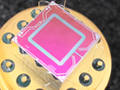
Completion of the miniOffset Project: Piezoresistive Technology Platform with Minimal Offset
In the recently completed miniOffset research project, a new scalable technology platform was used to minimize sensor performance – particularly zero offset and its temperature dependence – at the wafer and chip levels. Cost-effective CMOS/MEMS-compatible materials and processes can be used for this purpose
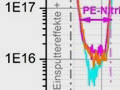
InOxA Project Completion: Innovative Oxide Structures for the Passivation of Silicon Interfaces
In the InOxA research project, the TOPCon contact developed for silicon photovoltaics was adapted for use in sensor diodes. To achieve this, a thin barrier oxide and highly doped polysilicon were deposited onto the base material, so that the contact also serves to passivate both the active area and the substrate contact
PJS Project Completion: On-chip multisensors based on the piezo-junction effect
Piezo-junction sensors simultaneously measure process parameters such as pressure, temperature, and vibration – making them ideal for applications in process measurement technology, power plants, oil and gas, and aerospace. The recently completed PJS research project investigated various influencing factors and relationships to determine the optimal pn junction
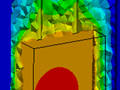
CryoMAG-RX Project Launch: High-Precision Temperature Sensor for Cryogenic Temperatures
One characteristic of silicon-based semiconductor resistors used as temperature sensors is that their resistance is affected by magnetic fields. The new CryoMAG-RX research project focuses on the development of a wafer-level temperature sensor that is easy to manufacture, in which the position of a variably adjustable temperature reference point and the shape of the characteristic curve can be influenced – either for specific applications or for optimal metrological performance – by a constant magnetic field
oLGAD Project Launch: Low-Gain Avalanche Detector with Ultra-Thin Oxides
In the new oLGAD research project, we are investigating layer systems designed to improve the performance of detectors by reducing dark current and increasing sensitivity for the detection of low-energy electrons