


Happy Easter – Creative Contest for Kids
The Easter holidays with family and friends are just around the corner, and the management of the CiS Research Institute once again invited everyone to participate in a creative hands-on activity. The many creative submissions from the young artists can be viewed in our online gallery
Machine Learning Electromigration Parameters (MEL)
The current research project, Machine Learning Electromigration Parameters (MEL), aims to lay the groundwork for new software tools to characterize and optimize materials with regard to electromigration.
This effect limits the service life and long-term stability of semiconductor devices in microsensor technology, power electronics, and integrated circuits. A better understanding of the physicochemical processes paves the way for new, improved developments
Webinar Freeform 3D Structured Silicon Photodiodes
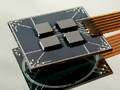
Dr. Martin Schädel, Head of the MOEMS department at the CiS Research Institute, will discuss new opportunities arising from technologies for three-dimensional structuring of silicon in a webinar on Monday, 30th March 2026, at 15:00

Technology-focused startups receive funding through the getstarted2gether competition
The 9th pitch event of the Thuringian competition getstarted2gether took place on 24th March 2026, at the Eiermannbau in Apolda. Ten technology-focused startups from Thuringia were awarded a total of one million euros in funding provided by the Thuringian Ministry of Economic Affairs

Project Launch: Development of Innovative Layered MEMS-IR Emitters
The new EiS research project focuses on the development of innovative stacked-layer MEMS-IR emitters. The goal is to create an even more miniaturized and cost-effective chip that offers at least the same light output as existing chips, thereby opening up new areas of application
Stress-independent on-chip temperature sensing (SOT)
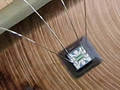
Silicon strain gauges (Si-SG) offer numerous outstanding properties. To reduce or compensate for the effects of temperature, temperature-sensing resistors, temperature diodes, and bipolar transistors were also integrated onto the same chip. The on-chip pnp transistors made it possible to implement temperature-compensated sensor configurations

Industry-relevant research findings at the DPG’s spring meetings
In the first half of March, the German Physical Society will hold its annual spring conferences in Mainz, Dresden, and Erlangen. The CiS Research Institute will present current research findings in the areas of defect-based light emitters in doped silicon, systematic comparisons of NV diamond materials, qubits in silicon-based quantum technology, and electromigration experiments through lectures and posters at Johannes Gutenberg University in Mainz and the Technical University of Dresden
Project completion Si-Heat Flux Sensor: a novel heat flux sensor
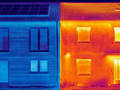
Typical heat flow sensors operate according to the Seebeck effect. The new development from the CiS Research Institute, based on temperature diodes connected in series, significantly increases the signal amplitude. These sensors are considerably cheaper to manufacture and can also measure absolute temperatures

Trade fair premiere at Germany’s leading trade fair for security and defense
ENFORCE TAC, Germany’s leading trade fair for security and defense, will kick off in Nuremberg on 23rd February 2026. The CiS Research Institute will be represented for the first time with a stand in Hall 6, Stand 6-215, the joint stand of LEG Thüringen, showcasing relevant development results such as a mobile vital sensor system, customer-specific photodiode modules for laser warning systems, a retrofit kit for non-invasive pressure measurement, and sensors for belt tension monitoring
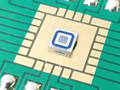
Presentation at the 21st “Trento” Workshop on Advanced Silicon Radiation Detectors
From 17th-19th February 2026, the 21st “Trento” Workshop on Advanced Silicon Radiation Detectors will take place in Perugia, Italy. The CiS Research Institute will be represented there with a contribution on improving low gain avalanche detectors (LGAD) in terms of sensitivity to low-energy electrons