
Optical magnetometry, based on optically detected magnetic resonance (ODMR) in NV centers in diamond, is a powerful method. It stands out due to its potential for high bandwidth, its ability to achieve extreme localization to the sensor volume of a single atom, and its potentially calibration-free approach. To utilize such NV defect centers, they are excited with green light. As a result, the defects emit red fluorescence with characteristic peaks.
The fluorescence intensity serves as a measure of the magnetic field strength, and various evaluation methods can be applied. Although there are a number of magnetic field sensor concepts based on NV centers—some with remarkable sensitivities and compact sizes—there is still no genuine approach to the industrialization of such magnetic field sensors. This would include, for example, the development of specific sensors or optical elements to achieve performance improvements and cost advantages through high specificity.
The KoSenDi project addressed this issue and aimed to investigate efficient reference signal determination and the optimization of light detection for the fluorescence excitation and readout of NV centers in ODMR-based magnetometers. This is because the sensitivity of such sensor systems always depends critically on the signal-to-noise ratio of light detection and the intensity of the laser excitation light, both of which needed to be investigated.
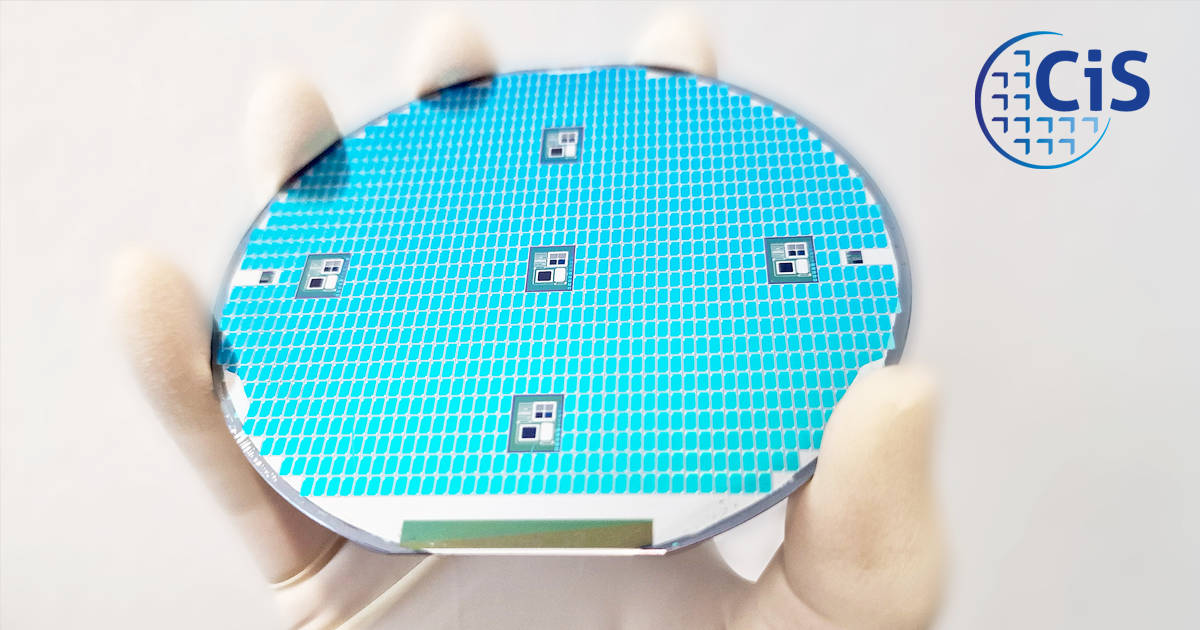
In this context, the technological steps for two key components of a compact magnetic field sensor system based on NV centers in diamond were developed, and the fabricated devices were evaluated using scientific methods: On the one hand, a partially transparent photodiode was developed, which allows the light intensity for photoluminescence excitation to be characterized directly within the light beam without additional optical components. On the other hand, for fluorescence light analysis, thin-film-based filter layers were successfully combined with standard silicon photodiodes, which effectively suppress the excitation light without limiting the efficiency of fluorescence light detection. This enabled the realization of a particularly compact optical assembly.
The functionality was demonstrated in various setups using magnetic field measurements as an example.
 The research and development work described here was funded by the Federal Ministry for Economic Affairs and Energy (BMWE) as part of the research project “Compact Sensor Unit for Measuring Magnetic Fields Using Diamond Fluorescence” (KoSenDi).
Funding code: 49MF220192