
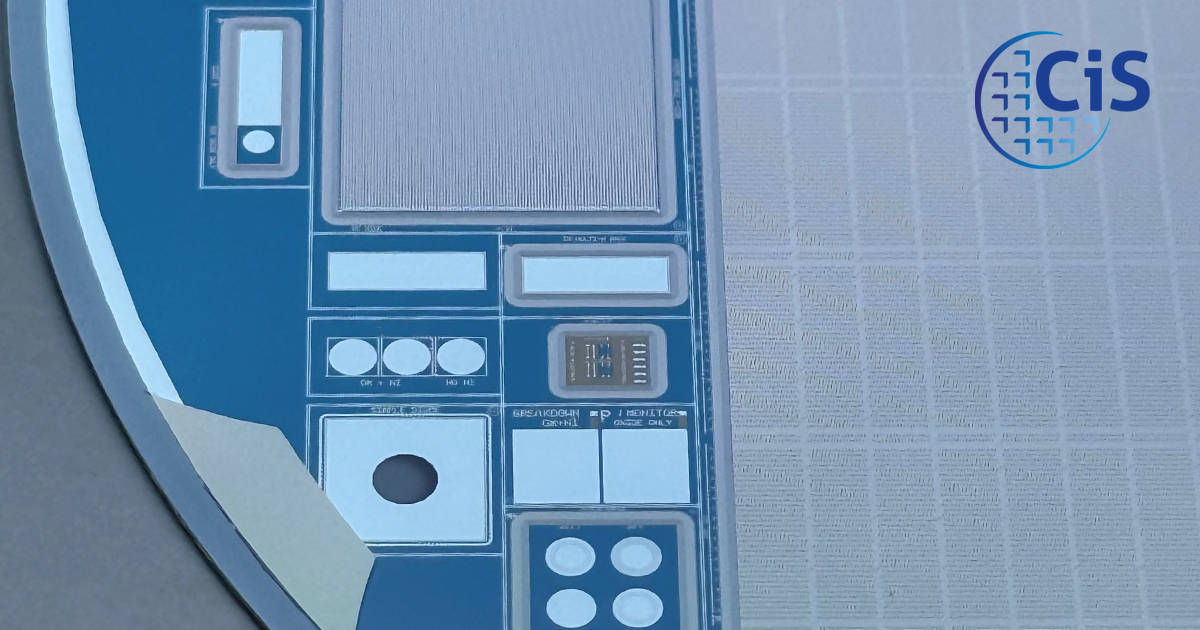
The manufacture of high-performance detectors – for example, for X-rays or high-energy radiation in materials research – requires advanced assembly and packaging technologies.
Conventional approaches, such as flip-chip designs, typically use heavy metals (such as lead-tin or gold-tin solders) and organic materials (adhesives, underfills) to bond the detector chips to the readout ASICs. Although these materials are well-established, they are increasingly becoming limiting factors given the ever-rising demands on detector performance, radiation resistance, and long-term stability. For example, as the atomic number increases, so do the absorption, fluorescence, and scattered light contributions of the metals under high-energy radiation (e.g., X-rays), leading to parasitic effects and limitations in the spatial and energetic resolution of the detector units. The development of innovative bonding technologies is therefore crucial for overcoming the limitations of today’s detector systems and opening up new areas of application.
The aim of the newly launched research project is to develop an innovative flip-chip technology that enables the direct mounting of detector chips (MEMS- or MOEMS-based) onto readout ASICs using aluminum as the primary contact material. This bonding process aims to avoid the use of heavy metals (such as lead, gold, and tin) and organic materials (adhesives). In addition, the thermal budget is to be kept as low as possible. The CMOS-compatible front-end metallization using aluminum or AlSi1 is optimized to be suitable for a novel, material-efficient flip-chip thermocompression bonding process. The result will be a high-performance, radiation-resistant, and resource-efficient package that optimally combines the advantages of modern bonding methods with the specific requirements of quantum and radiation detectors, while remaining fully CMOS-compatible.
 The research and development work described here was funded by the Federal Ministry for Economic Affairs and Energy (BMWE) as part of the research project “Aluminum Ultra-Low-Temperature Interconnects for Radiation Detectors” (ALUMINIS).
Funding code: 49MF260050