


Interactive Experiments at the 2026 Ilmenau Science Night
On 20th June 2026, the CiS Research Institute invited visitors to explore, participate, and marvel at interactive experiments and demonstrations as part of Ilmenau’s Science Night. Visitors of all ages were able to immerse themselves in the fascinating world of research and technology. We presented a diverse range of our silicon-based microsensors for visitors to learn about and try out

ApproxiSens Project Completion: Development of a Force Transducer
The successfully completed ZIM collaboration project ApproxiSens resulted in the development of a novel measurement system for hardness testers that raises industrial hardness measurement to a new level of quality. The newly developed measurement system for industrial hardness testing increases throughput in batch measurements by using precise control to achieve high speeds as the indenter approaches the test surface

Macro-performance with 18 running enthusiasts at the RUN corporate run
At the 17th annual RUN Corporate Run, an 18-member team from the CiS Research Institute ran the five-kilometer course through Erfurt’s beautiful, historic old town for the first time. The team wore matching blue shirts emblazoned with the slogan “Micro-sensors, Macro-performance!”
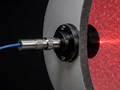
Launch of the ReSpektIS project: Integration sphere with Speckle-Tech technology for the refractive index
The new ReSpektIS research project focuses on the development of a novel, compact optical component for a measurement system designed to perform highly accurate relative measurements of the refractive index of gaseous media, or a refractometer based on an integrating sphere for highly sensitive refractive index measurements of gaseous media

Silicon-based microsensors at SENSOR+TEST in Nuremberg
From 9th-11th June 2026, the CiS Research Institute will once again be exhibiting at the international gathering for sensor, measurement, and testing technology in Nuremberg. At SENSOR+TEST 2026, interested visitors can meet our experts again this year at Booth 501 in Hall 1 to discuss the latest research findings in silicon-based microsensor technology.
At the 23rd ITG/GMA Symposium “Sensors and Measurement Systems 2026,” the accompanying scientific conference at the Nuremberg Convention Center West (NCC West), the CiS Research Institute will be represented with four scientific presentations

Launch of the Pash-Sense Project: Development of a Highly Sensitive Hydrogen Sensor Based on a Palladium-Silicon Schottky Diode
To enable the early detection of hydrogen leaks at trace levels, the CiS Research Institute is developing a novel, highly sensitive sensor based on a Pd/Si Schottky diode with an integrated heating structure. To ensure the flawless manufacturing required for this component, the wafer inspection system – recently approved as part of the “TechWB” investment project – is being used for high-precision defect analysis in the submicrometer range
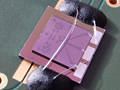
Competitive German Quantum Computer (CoGeQ): Subproject involving the development of demonstrators successfully completed
The final results of the research conducted as part of the “CoGeQ” project were presented at Quantum Photonics 2026 in Erfurt in early May. The collaborative project aimed to demonstrate a mobile spin-based quantum processor based on NV centers in diamond. The CiS Research Institute was responsible for the field of assembly and interconnection technology and developed an efficient method for assembling the layered stacks consisting of a diamond chip and a silicon interposer

Launch of the aQuSiS Project: Acceptor-Based Quantum Systems in Silicon
Color centers such as the G- or T-center in silicon are currently used as the building blocks for silicon-based quantum technology. The aQuSiS research project aims to realize indium-based acceptor defects as readily accessible quantum systems for the first time. The increased understanding of the structure and functioning of this elementary quantum building block could serve as the foundation for its continued integration into modern quantum technologies
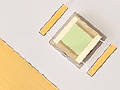
Project Completion NH3-BZ: Photoacoustic Sensor for Hydrogen Production
The sensing cell is designed to determine the residual ammonia content in a dry N₂/H₂ gas mixture—a blend of nitrogen (N₂) and hydrogen (H₂) containing 75% hydrogen by volume—and is intended to enable real-time monitoring. The developed solution is based on innovative thermal emitters and operates without a chopper. Custom sensor elements can be quickly integrated

CiS Research Institute Returns as an Exhibitor at Quantum Photonics
On 5th and 6th May 2026, the CiS Research Institute will present its portfolio of quantum technologies at Booth 615 in Hall 2 at the Erfurt Trade Fair. Dr. Mario Bähr, a researcher at the CiS Research Institute, will speak on “Enabling Technologies for Quantum Applications” during a coffee pitch on Tuesday at 15:15